
Commercial invoice
Records the transaction parties, products, value, currency and trade terms.
Document Preparation
Understand commercial invoices, packing lists, air waybills, bills of lading and product-specific records used in international freight.
Start with the essentials →Essential framework
Product names, quantities, package counts, weights, values and parties should align across the document set. Transport documents record movement; they do not replace commercial, customs or product-compliance records.
Records the transaction parties, products, value, currency and trade terms.
Explains how quantities, weights and dimensions are distributed across packages.
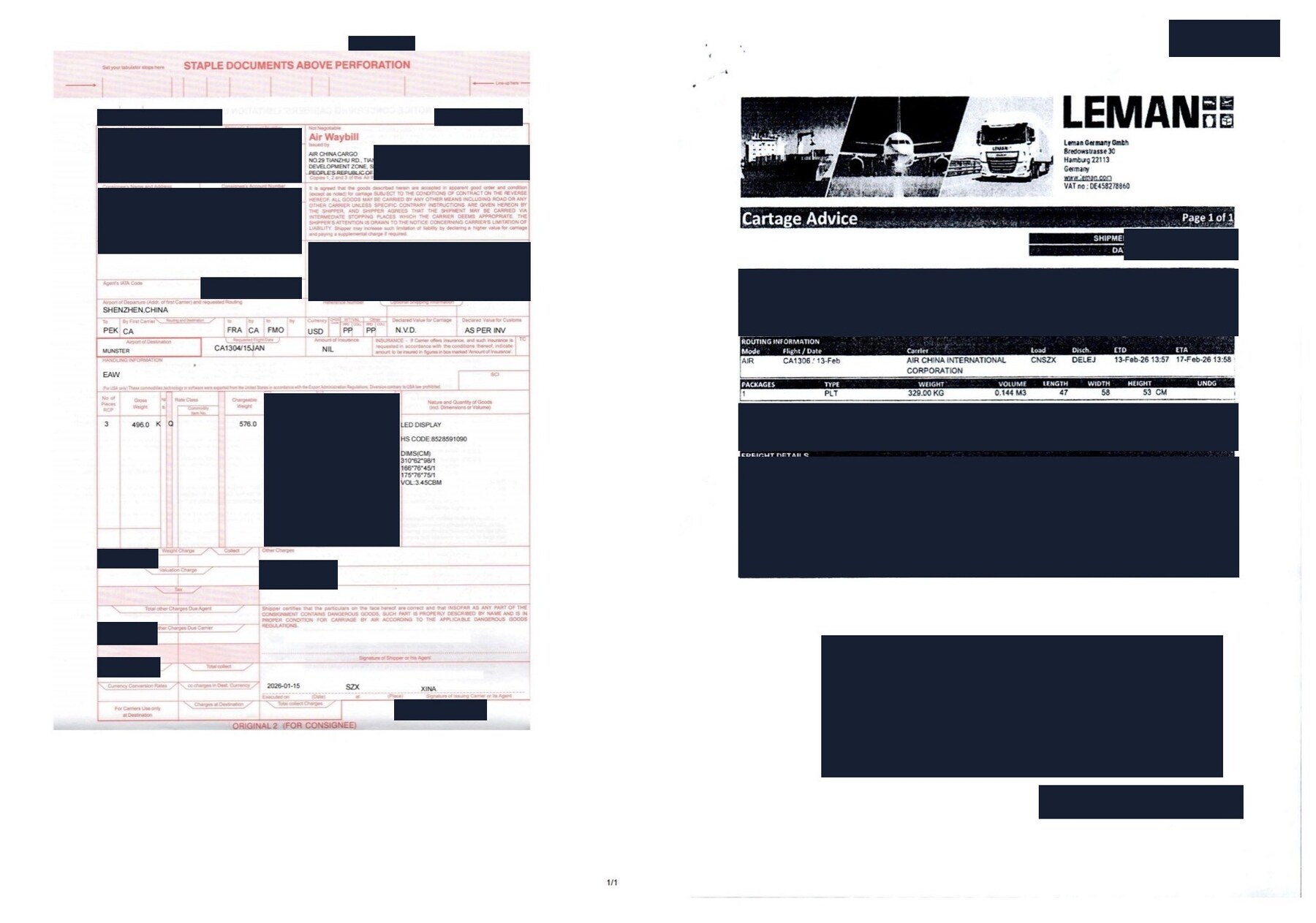
The air waybill, bill of lading or courier waybill records the carrier movement.
Certificates, declarations and permits depend on the cargo and destination.
Planning checklist
Requirements still depend on the actual product, route, commercial arrangement and destination authority.
Use the agreed legal and delivery details
Avoid vague descriptions such as parts or accessories
Align units, cartons, pallets and handling pieces
Use final packed measurements
Match the commercial transaction
Confirm release, consignee, notify party and delivery needs
Related resources
Use the complete guide, service or evidence page when you need more than a general definition.
Common questions
Open each answer for general planning guidance, then confirm shipment-specific requirements.
No. The invoice supports the commercial transaction, while the packing list describes how the cargo is physically packed.
The responsible shipper and consignee should review party, cargo, package, weight, routing and release details before issuance.
No. It depends on the destination, product, trade arrangement and importer’s requirements.
Some changes may be possible but can create carrier, customs, timing and amendment consequences. Review drafts before final issue.
Apply the knowledge
Share the product, packing, value, origin, destination, delivery responsibility and ready date.